Here at GFT, in camp or team settings we will often group players by skill over age, speed, size or aggression. What this does is help develop all players in each group. The more skillful players work together and then the bigger, faster or more aggressive kids with less skill train together. Let’s dive into why this helps each individual.
Protecting player confidence
First, the most important thing in youth soccer is building the players passion and confidence. This way, they want to keep playing & growing.
This is why it’s important to communicate that overall performance doesn’t come from skill alone…
In the youth game the best players are oftentimes fast, aggressive or naturally understand the game & ball.
Of course improving technically is vital, but to do that, you sometimes should group players accordingly.
So please understand that this method might require the best athlete (bigger/faster) to not be paired with the technical group.
Youth soccer has tons of situations where a smaller technical player doesn’t start over a fast athletic kid.
If you are technically behind, this doesn’t identify your overall play.
Again, a player with a low skill set could be the best player on gameday… That’s when work ethic, aggression, natural understanding, athleticism and technical ability all play an important role.
Pairing the lower skilled players together helps them not lose confidence or courage… We want them to grow both mentally and technically and this is one way to do it.
In addition, this helps them more skilled players not get frustrated or lose the ability to move the ball fast.
All this to say, skill over age should be incorporated into group practices for the benefit of each child.
NAYS flew from Florida to Texas to use GFT to film their soccer videos… These are some of my 9-11 y/o trainees.
Game player vs practice
2 encouraging soccer stories:
Story #1:
There’s a player I played pro with who was from Haiti.
On gameday he would be one of the most dangerous players due to speed and goal scoring ability.
During practice he struggled in passing drills or rondo/keep away type drills. The reason was because in tight spaces he didn’t have the first touch or passing accuracy to keep up with the rest.
Story #2:
There’s a girl on my daughters team that joined around 11 and started playing for the first time at 10. From 10-11 she played rec, but at age 12 & 13 was on the club/travel team.
She went from the worst player to a top 5 most important player within 2 years…
For the first year she was easily the lowest on the team in regards to technical ability. Although, since she worked hard would do okay okay in the game.
About 18 months later it clicked and she was improving with first touch and passing. She went from the last substitute to making the starting lineup.
24 months later, age 13 (her 2nd club year) she was one of the most important players. Still one of the lowest technically, but was catching up.
Weaker tech players do benefit from training with skilled players, but there needs to also be the times where skill over age or aggression is the focus.
Besides using walls or rebounders, curbs [see video] are fantastic for working on keeping your pass low and then trapping the ball out of the air.
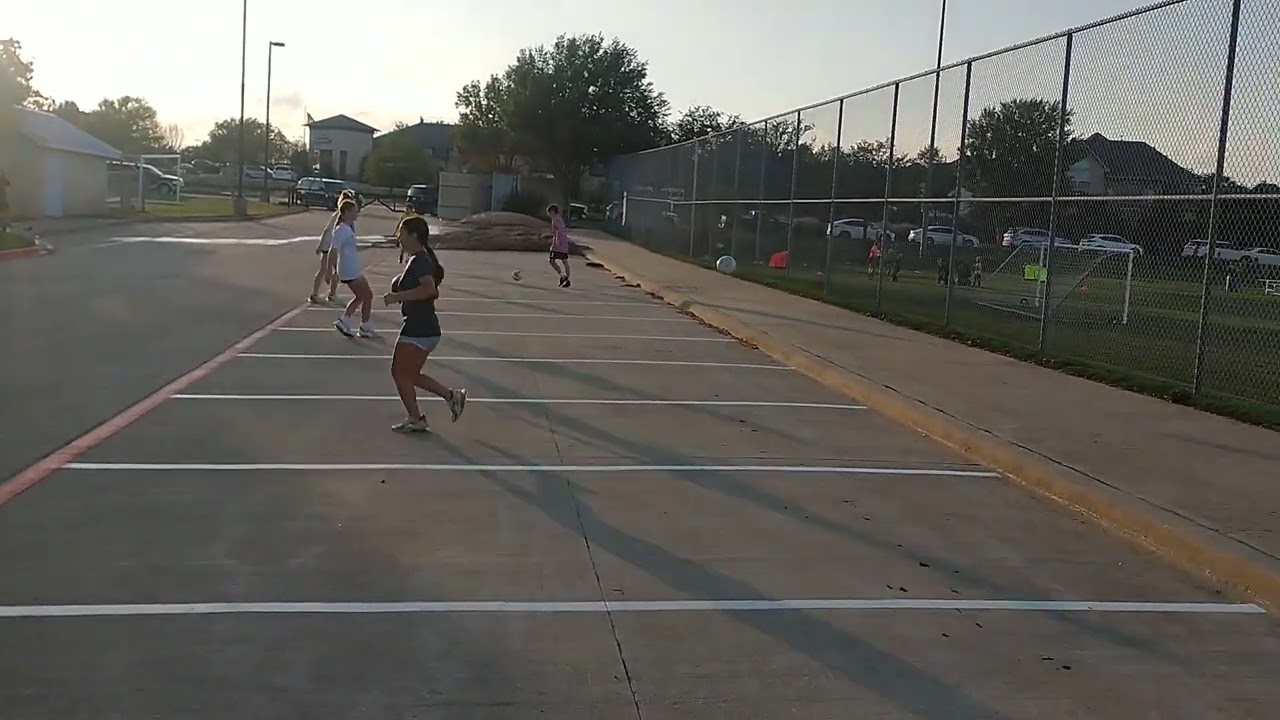
Grouping players at practice by skill, not age
Again, practice is different than games… The worst practice player could be the best game player. Therefore, don’t identify a player how they do or are grouped in practice.
How confidence plays a role…
When a technically weaker player is grouped with skillful players, it can be embarrassing and hinder development.
If the lower technical players are grouped together, they don’t feel like they are letting anyone down during mistakes. The anxiety is much lower, which helps them focus and improve more.
There have been times I had two groups compete and the lesser skilled group can hang in activation drills because they want to prove you wrong. It might not look as clean, but the speed of play is good.
How to catch up technically
If you spend 30-60 minutes extra per week training on your own, doing the right things a lot can happen…
In 3 months a player can grow technically in what would have taken 1 year practicing only with their team.
Make sure you do a mix of dribbling, trapping & passing with both feet.
First, start with the basics…
Soccer homework drills
– Dribbling and change of direction
- Figure eights are always good… When turning with the outside of the feet, get your foot high when turning around the cones.
- Sole roles
- In & outs, using one foot, touch the ball with the inside and then outside of the foot, with only 1 step between touches.
- While dribbling forward 10-15 yards, use the outside of both feet, taking 3 steps between touches.
- Running with the ball using larger touches [about 2 touches every 10 yards]. This is useful for when you have open space ahead. It allows you more speed.
– Passing against a wall or rebounder
- 2 yards away, pass the ball using only 1 touch with your strong foot. Get 30 passes, then switch to the weak foot.
- 5-10 yards away work on 1 and 2 touch passing
- If you have a wall that’s high, work on volleys (1 & 2 touch)
- Get a 2 wall setup like this
How to use a wall to improve first touch and passing – Read Full Article
Fast players usually need dribbling work
Nobody is blessed with everything… Oftentimes, the speed players need extra work with the ball at their feet.
2 reasons speed players need to work on dribbling…
- Touches are too big.
- The ball gets stuck under them. Thought the player is athletic, they are clumsy with the ball.
You want to control the ball, not let the ball control you… Therefore, go slow and get your form down.
You’re already fast, so focus on becoming smoother.
Fast players who can’t control or pass the ball accurately will improve better when paired with players on their own skill level because they can relax and not freak out as much.
This is another reason skill over age or speed is needed in activation or possession drills.
Advanced dribbling drill for soccer players
Slower players need to practice trapping and passing
If a player is slower, of course working on running speed can help, but there’s other important things to focus on.
There are certain high school or even pro players who are not fast… What they are best at is trapping and passing.
When this type of player needs to hold the ball because a pass isn’t open, it’s better if they can turn or shield vs dribbling. Hopefully after a few seconds someone gets open. If not you can pass into space for teammates to run onto.
Best soccer drills for a slower player
- Short precision passes (3-7 yards) using a wall. Walls are best because you get more reps than using a partner.
- First touch on the ground and in the air. Kicking against a wall will allow for 1st touches/trapping. Kick it on the ground and in the air, so you receive it both ways.
- Long balls with laces and bending. Kick with a partner or against a wall (15-30 yards, depending on the age).

Our Most Popular Posts:
- 3 ways to strike the ball with power
- How to play aggressive
- 8 best 1st- touch drills
- Expert dribbling tips
- Goal side defending