The world cup is so important because it’s the biggest tournament on the globe… There is no other sports as popular. Literally, every country plays it.
Overview of Popular Sports Worldwide
The most popular sports globally are ranked primarily by the number of fans they attract. Cricket is so high because of the high population in India where the sport is massive and pays athletes millions.
Top Sports by Number of Fans
| Rank | Sport | Estimated Fans (Billions) | Key Regions of Popularity |
|---|---|---|---|
| 1 | Football (Soccer) | 3.5 | Europe, Africa, Asia, North and South America |
| 2 | Cricket | 2.5 | Asia, Australia, UK |
| 3 | Basketball | 2.2 | America, Europe, Asia |
| 4 | Hockey (Field and Ice) | 2.0 | North America, Europe, Asia |
| 5 | Tennis | 1.0 | Europe, Asia, America |
| 6 | Volleyball | 0.9 | Europe, Asia, Americas |
| 7 | Table Tennis | 0.85 | Asia, Europe, Africa |
| 8 | Baseball | 0.5 | America, Japan |
| 9 | Rugby | 0.475 | Europe, Africa, Asia |
| 10 | American Football | 0.4 | America, growing internationally |
Think about all the hype for the NFL Super Bowl or MLB World Series each year… They are only popular in a few countries.
Soccer/Futbol is the worldwide sport.
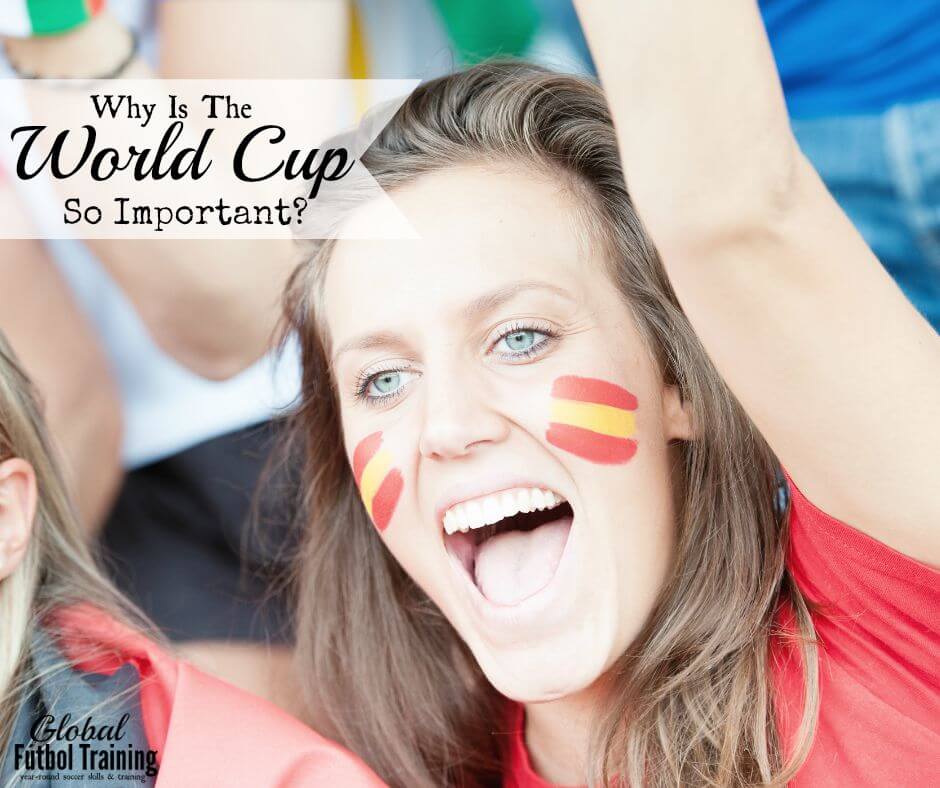
Understanding why the World Cup matters, how teams qualify, and how the 2026 World Cup format changes competition gives players and fans a deeper perspective on the game.
This global event combines international competition, national pride, and global visibility, making it the most watched sporting event in the world.
Table of contents
- Who makes the world cup and how
- Expansion from 32 teams to 48
- Most world cup titles and success
- What winning titles does for players
- Club vs country intensity
- Playing for opportunity
- How the world cup creates new stars
Update for 2026: The World Cup now expands to 48 teams, not 32. This increases match volume, travel demands, and variability—making depth, recovery, and execution under pressure more important than ever.
Most people watch the World Cup wrong
Most fans watch moments. Serious players watch details—first touch, speed of play, tactical substitutions and decision-making under pressure.
If you don’t understand what you’re watching, you won’t improve from it.
The world cup is by far the most important soccer/football tournament on the globe! Being only every four years builds up much excitement and passion. Playing for your country brings that extra amount of pride for players. In 2022 it was easy to see that the Argentine players wanted to win for Messi. For some people, it even goes as far as confirming a player being the greatest of all time – or not.

Who makes the world cup and how
How do teams qualify for the World Cup? Qualification is based on regional competitions, not just global rankings, which is why strong teams can still miss out.
If your understanding of the game is surface-level, your development will be too.
Everything you’re watching at this level comes down to execution—first touch, control, and speed under pressure.
Train first touch like elite players →
There are 48 nations that qualify, but it’s important to know that it’s not the top ranked 48…
Each region of the world has to have x-amount of teams that qualify.
Therefore, you’ll usually have 1 good European nation that doesn’t make it.
Then you’ll have the host nation always in, along with countries from Africa and Asia, who historically don’t make it out of group stage very often.
Japan and South Korea have made it to the quarter-finals, but usually it’s European and South American who dominate.
Expansion from 32 teams to 48
The 2026 FIFA World Cup format expands to 48 teams, increasing the number of matches and changing how teams advance through the tournament.
In October 2016, FIFA president Gianni Infantino stated his support for a 48-team World Cup in 2026.
On 10 January 2017, FIFA confirmed the 2026 World Cup will have 48 finalist teams.

Most world cup titles and success
Looking at which countries have won the most World Cups helps explain why certain nations consistently dominate international soccer.
Champions (1st place)
Want to understand why elite players dominate these moments? Study how they strike the ball under pressure:
How top players generate power →
- Brazil (5) 1958, 1962, 1970, 1994, 2002
- Germany (4) 1954, 1974, 1990, 2014
- Italy (4) 1934, 1938, 1982, 2006
- Argentina (3) 1978, 1986, 2022
- France (2) 1998, 2018
- Uruguay (2) 1930, 1950
- England (1) 1966
- Spain (1) 2010
Runners up (2nd place)
- Germany (4)
- Argentina (3)
- Netherland (3)
- Brazil (2)
- Italy (2)
- France (2)
- Hungry (2)
- Czech Republic (2)
- Sweden (1)
- Croatia (1)
What winning titles does for certain players
Winning the World Cup often defines a player’s legacy and is a major factor in debates about the greatest soccer player of all time.
If you cannot control the ball cleanly, you cannot perform at this level—regardless of talent.
The only tournament where teams from all around the world are in it at the same time.
The Women’s World Cup is played the year after the men’s… I don’t know why they can’t alternate with the Women’s WC, so we get a tournament every 2 years]. This year, Vancouver will also be a host city and the home of one of my former teams (Whitecaps).
If you look at history and the importance of any tournament you can see that World Cup means more to everyone as it allows a country to prove they are the best for the next 4 years.
Playing for clubs is where they get their deep pockets, but players usually end up playing for 3 or more clubs in their career, yet only one National Team [Country].
You always hear about players like Pele, Maradona & Zidane not only because they were the best during their time, but they won the World Cup.

Playing harder for club vs country
With most player salary coming from clubs, it seems that some people play harder for their club than their country.
This isn’t true for most, but it certainly seems like it when you watch some of the established athletes play.
Example: Germany as a team played super hard the year they won in 2014… Then in 2018 they were not playing with the same intensity… It’s like they just thought that playing 90% they could win again.
Arrogance and just not being as hungry are the two main reasons players stop going 100%
[Hmmm… it seems like there could be an entire conversation on the unethical influence of a country’s club on their star player from another country…]

Playing for your family & opportunity
On the other side you have Countries like the African nations who play as hard as anyone.
The reason is because it’s their way to shine and be seen to sign for a big contract. Giving them the ability to help their family and friends back home.
When you are already on a big club making big money it’s very hard to play with the same fight as someone who is from a poor country playing with a smaller size club or league.
Everyone knows that the word cup will be the place where a few new stars are born and more history will be made.
How the World Cup creates new stars
Many fans search for who became famous from the World Cup, and every tournament introduces new players to the global stage.
Case in point:
James Rodriguez in 2014 was the player who fit this description…
He scored lots of goals and his country [Columbia] went far into the tournament and played pretty fútbol from game one.
Now just from this event and this country doing so well you see even more Columbians being brought into leagues all around the world.
So this is why the World Cup is so important because it affects so many people of all ages and places.
If you’re watching this, your training should reflect it
The World Cup exposes the gap.
Not effort. Not talent.
Execution.
If your touch breaks down, your game breaks down.
Train the foundation elite players rely on →
FAQ: Why is the World Cup so important?
Why is the World Cup important in soccer?
The World Cup is the only competition where the best players from every continent compete at the same time, representing their country. This creates unmatched pressure and global significance.
How does the 2026 World Cup format work?
The expanded format increases the number of matches, introduces more variability, and makes squad depth and recovery more important than in previous tournaments.
Why do some players perform better in the World Cup than at club level?
The World Cup provides a global stage with higher stakes. Players are often more motivated representing their country, which can elevate performance.
What should players focus on when watching the World Cup?
Focus on first touch, positioning, decision-making speed, and movement off the ball—these are the true performance indicators at the highest level.
Our Most Popular Posts:
- how to shoot with power in soccer
- soccer first touch drills for better control
- Expert dribbling tips
- Goal side defending
- How to be more aggressive
Follow @GFTskills on Social Media